




How to Read an Unclaimed Money Record
Not sure what the fields in an unclaimed money record mean? Learn how to interpret the owner name, address, holder, asset type, and total owed.
When you search for unclaimed money, you may see a record that looks like this:
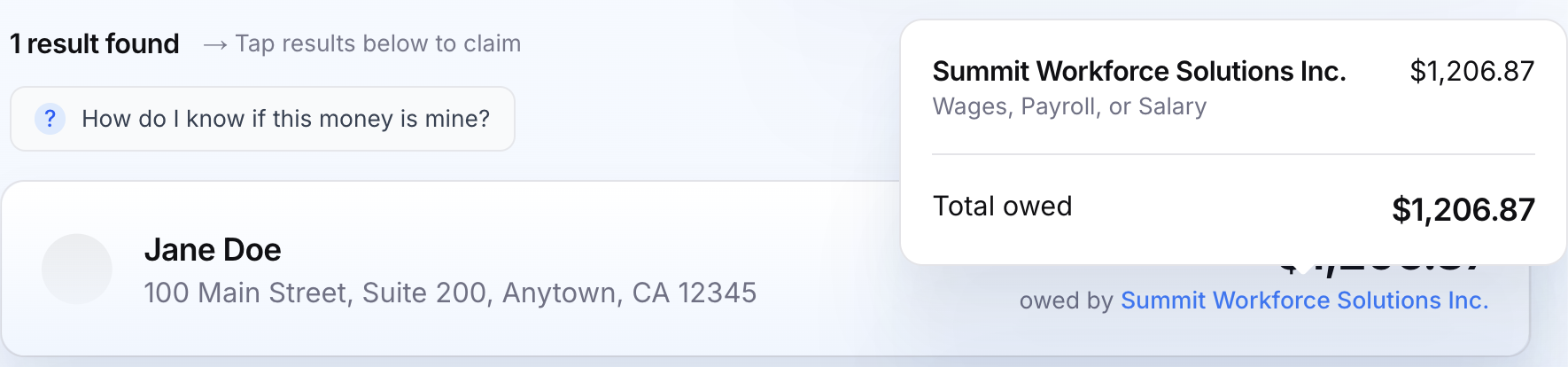
Example of an unclaimed money record as shown on Sparrow.
Understanding what each field means can help you determine whether the record likely belongs to you.
Here is how to read it.
Owner Name
In this example, the owner name is Jane Doe.
This is the name reported by the company that transferred the funds to the state.
Important things to know:
- The name may reflect older records such as a maiden name.
- The name may reflect common aliases such as nickname you've used on documents.
- Middle initials may appear or be missing.
- Formatting may vary.
- Minor spelling variations are common.
If the name is close to yours and other details match, it may still be your record.
Owner Address
The address shown is 100 Main Street, Suite 200, Anytown, CA 12345.
This is typically the last known mailing address the reporting company had on file.
It does not need to match your current address.
Many unclaimed money records are tied to:
- Former apartments
- College housing
- Old employers
- Previous states of residence
An older address is normal and often expected.
Holder (Reporting Company)
In this example, the holder is Summit Workforce Solutions Inc.
The holder is the company that originally held the funds before transferring them to the state.
For example:
- An employer
- A payroll processor
- A bank
- An insurance company
The holder is not who you claim the money from directly. The funds have already been transferred to the state’s unclaimed property program.
The company name simply tells you where the funds originated.
Asset Type
The asset type shown here is Wages, Payroll, or Salary.
This describes the category of the funds.
Common asset types include:
- Wages or payroll
- Refunds
- Insurance proceeds
- Utility deposits